Arc Mainnet Explorer Adds Live Blocks, Contract Data and API Access
| Shelf | Ethereum & Altcoins |
|---|---|
| Date in | |
| Readers | 396 |
Blockscout’s Arc explorer covers live transactions, contract data and stats, while its API adds Arc mainnet and testnet support.
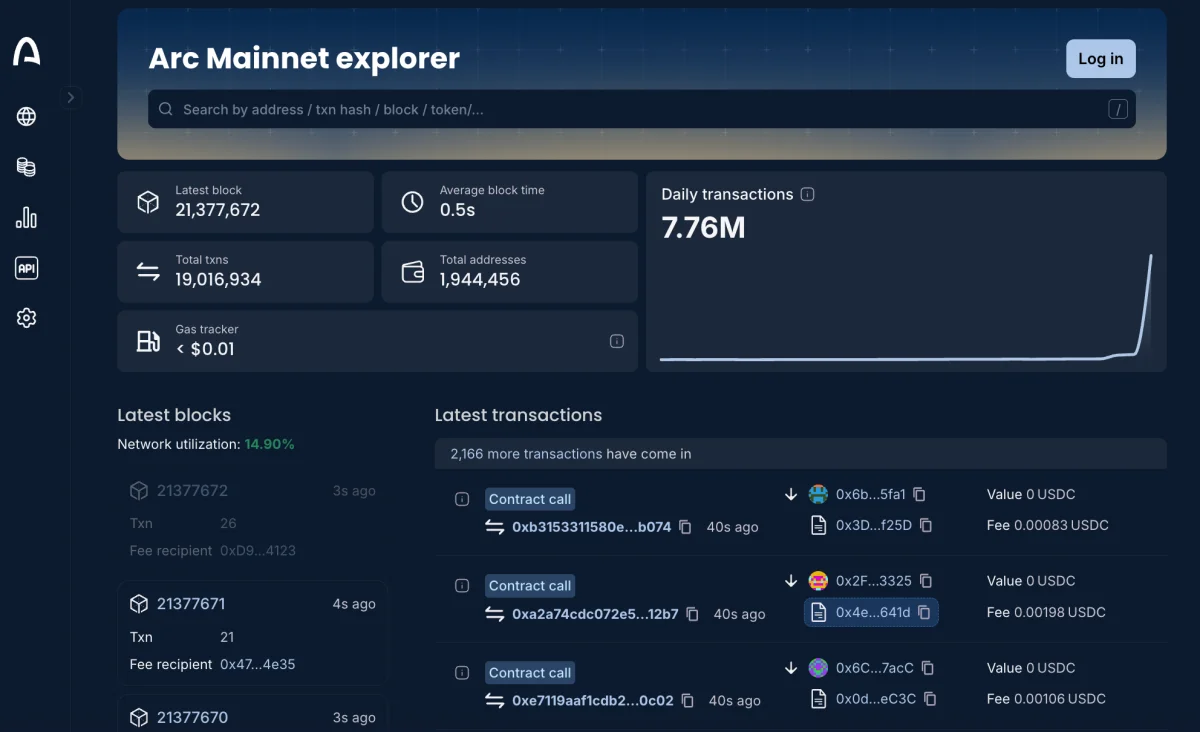
Arc’s mainnet launch came with a public data layer from day one: Blockscout now provides a block explorer for the network, with transaction, address, contract and gas information available at explorer.arc.io. For developers and users, the practical change is that activity on the new chain can be inspected through a browser interface and queried through Blockscout’s API.
Arc is an open, EVM-compatible Layer 1 developed by Circle. The network is designed for financial markets, with real-time money movement and USDC used to pay gas. Its EVM compatibility gives developers a familiar execution environment, while the choice of USDC for transaction fees makes the fee asset part of the network’s operating design. The available information doesn’t specify Arc’s validator model, finality guarantees or operational performance, so the explorer’s launch should be understood as an access and visibility milestone rather than evidence about those properties.
Explorer coverage and chain identifiers
The explorer supports Arc mainnet and testnet. Its interface streams new blocks and offers universal search, decoded transactions and logs, and verified contract source. These features let users follow activity as it is recorded, inspect transaction details, and read source code when a contract has been verified. Decoded logs can make contract events easier to interpret, though they do not independently establish that a contract behaves as users expect.
Blockscout’s statistics page presents chain activity across selectable time periods. Metrics include new accounts, transaction trends and contract deployments. These measures can help developers assess whether activity is changing over time, but the source provides no specific counts or period totals. The statistics therefore offer a way to observe growth, not a reported measurement of Arc’s adoption.
For API users, the chain identifiers are 5042 for mainnet and 5042002 for testnet. Blockscout says its Pro API uses the same key, base URL and endpoints across more than 100 chains, with Arc now included. The service also offers WebSocket access and data through microservices. Developers can find the API details and request a key through Blockscout’s developer portal.
What API access changes for developers
A shared API across multiple networks can reduce the work involved in adding chain data to an application: teams can use a consistent interface while selecting the chain they need. Blockscout says Pro API access includes higher call limits and requests per second, with options to receive selected data from supported chains. Those capacity details matter to applications that need regular updates, but the source gives no specific limits or service guarantees.
The WebSocket option changes how applications can receive updates. Instead of repeatedly asking an endpoint whether something has happened, a client can maintain a connection and receive events as they arrive. Blockscout says this can reduce unnecessary requests and help manage API credit use. In practice, developers still need to handle connection drops, duplicate events and missed updates; the source does not describe the service’s recovery behavior or delivery guarantees.
Blockscout’s example for wallet monitoring uses a multiplexed WebSocket connection. A client can subscribe to an address and receive a JSON event when it moves funds, including native transfers and ERC-20, ERC-721 and ERC-1155 token transfers. One connection can hold up to 100 subscriptions. The company says its guide includes a Discord webhook relay and that setup takes under an hour. The implementation details are available in its wallet alert bot guide.
This push-based approach can be useful for monitoring, analytics and notifications, but the presence of an alert doesn’t explain why a wallet moved an asset or what may happen next. Users building monitoring tools need to decide which addresses and event types matter, and how to present transfers without implying more than the on-chain data establishes.
Token metadata and verification limits
Blockscout also describes integrations that let select launchpads submit token details during launch. The stated metadata includes a token’s name, website, logo, description, email and social accounts. Blockscout says verification helps display those details in search and distinguish a listed asset from similarly named or spam tokens. Launchpads Radardex and Archemist have added this submission flow: Radardex and Archemist.
Verification of metadata should be read narrowly. It can associate information with a token listing and make that information easier to find; it does not, on the details provided, establish the token’s value, the conduct of its creators, or the safety of interacting with its contract. Users still need to examine the contract and assess claims independently.
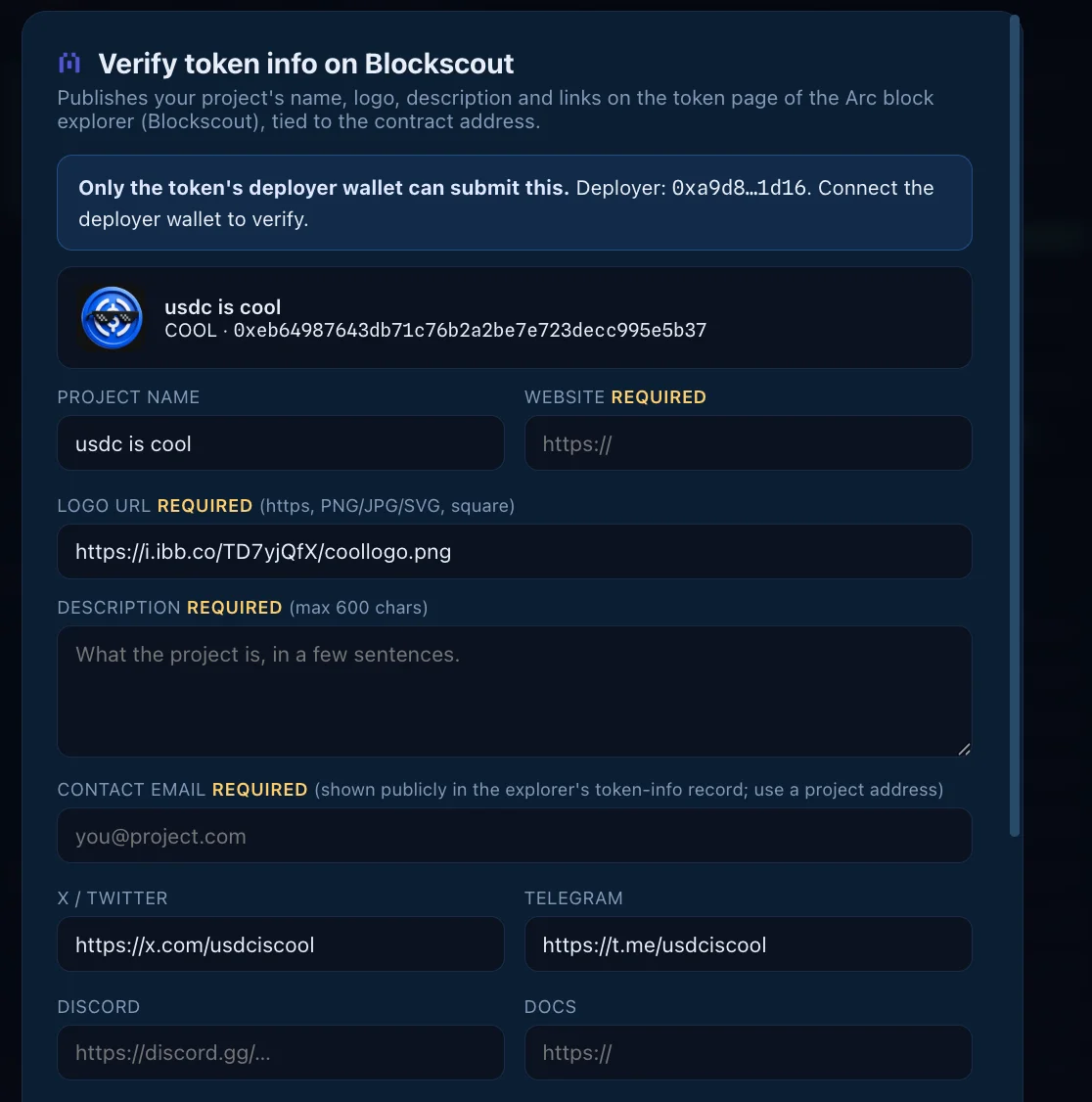
Projects that did not use an integrated launchpad can submit token details through Blockscout’s interface. The service describes direct submission as free, while also reporting a backlog caused by a sharp increase in requests. It offers a paid expedited review path for token owners seeking faster manual processing. Instructions are available in the manual token information guide and the expedited submission instructions. The backlog means timing may vary, and the source does not give an estimated processing window.
Usage across chains
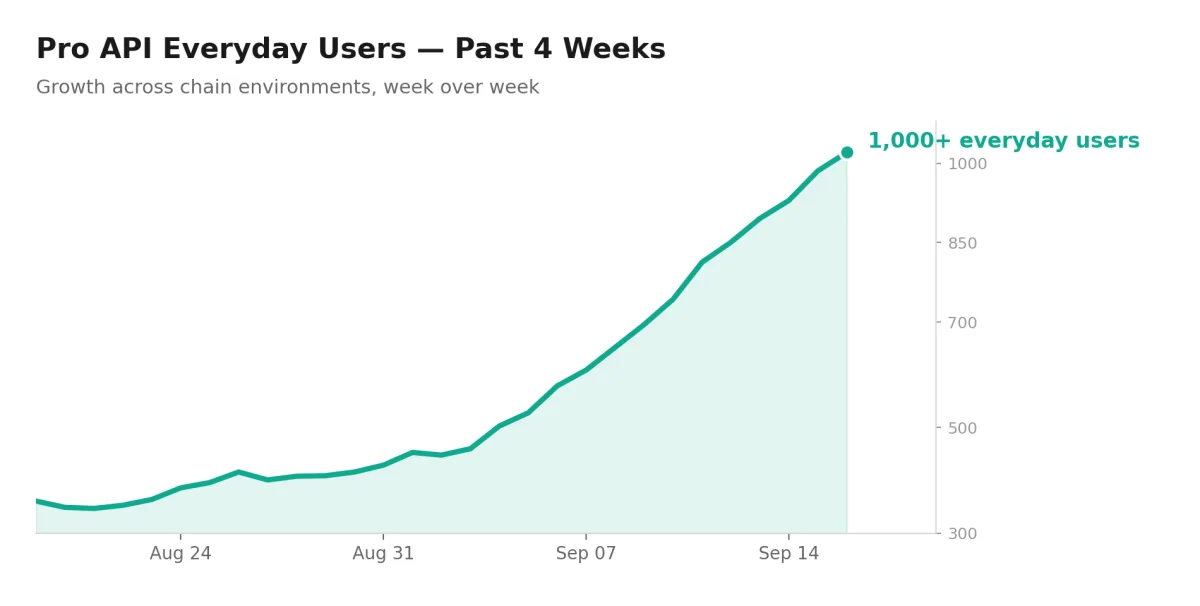
Blockscout reports higher daily API use over the past month, including activity on Ethereum, Base and Arc. It attributes faster growth in multichain Pro API usage to the launch of Robinhood Chain, but supplies no chart values or totals in the text. The usage report is therefore qualitative; it indicates the provider’s account of demand, rather than a quantified comparison between networks.
The Arc explorer and API give users several ways to inspect a chain that is newly live: a browser interface for individual activity, statistics for broader trends, and API connections for software that needs chain data. The next useful evidence will come from actual usage and from operational details such as API limits, event delivery behavior and the completeness of explorer data. For now, Arc’s launch makes its activity accessible to developers and users, while leaving those performance questions open.
Blockscout also points builders to Arc ecosystem grant programs: small project grants and larger deployment grants. Its Arc explorer build guide describes getting started with the explorer and API.
Further Blockscout resources
Blockscout highlights its token verification documentation, Pro API access and the real-time wallet alert guide. The newsletter is available to supported-chain community users through MyAccount. Readers can send feedback through Discord, or follow Blockscout on X and Discord.