Solana’s Faster Slots Reshape Validator Rewards and Operations in Q3 2026
| Shelf | Ethereum & Altcoins |
|---|---|
| Date in | |
| Readers | 740 |
Slot times fell to 250ms as Figment’s validator metrics improved. Client choices, block timing and changing reward sources shaped the quarter.
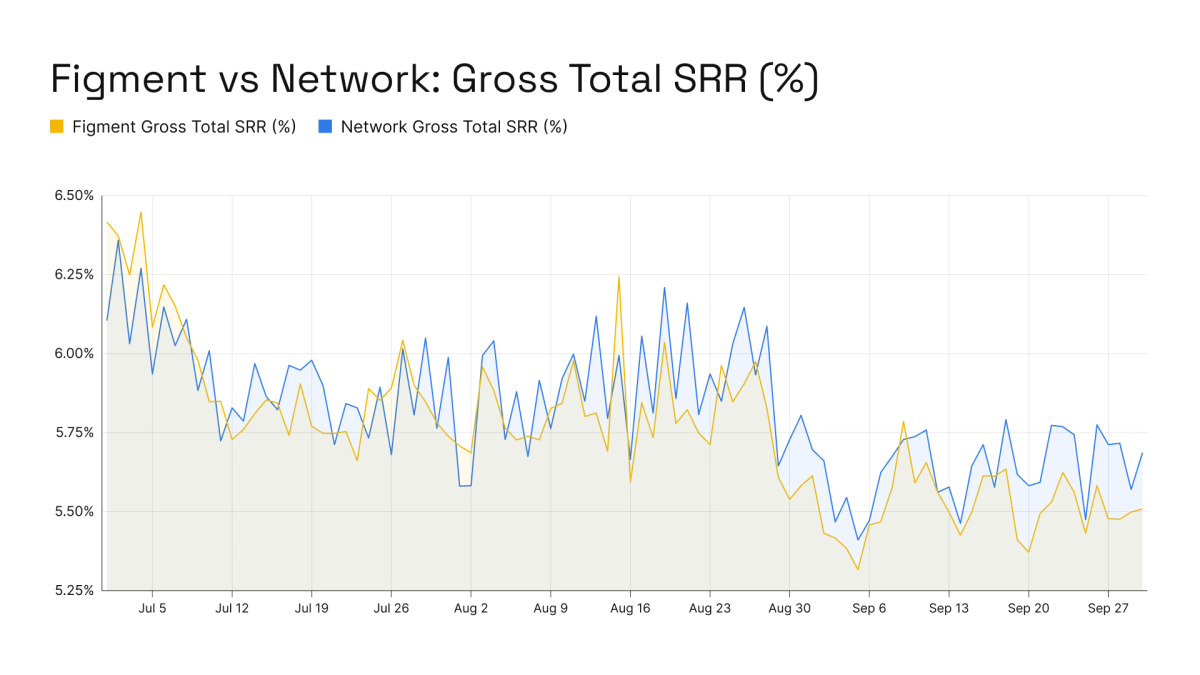
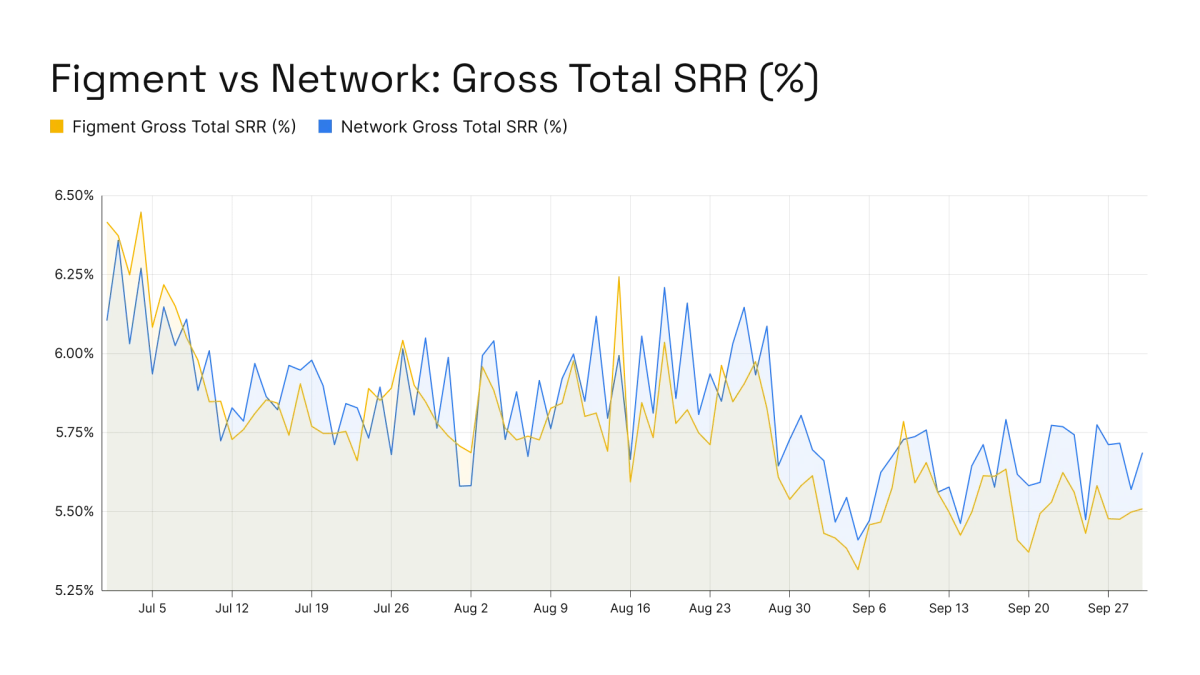
Solana’s move to 250ms target slots changed the operating conditions for validators in Q3 2026, while a shifting block-building market affected reported rewards. Figment’s validator recorded a 5.74% median gross staking rewards rate (SRR), below the network median of 5.80%. Its skip rate and voting effectiveness improved from Q2, even as the final weeks of the quarter brought new questions about block timing, client selection and how rewards are captured.
The report covers Figment’s main Solana validator across July, August and September, Epochs 995 to 1046. The quarter included more epochs than earlier quarters because Solana shortened target slot times in three steps: to 350ms on August 21, 300ms on August 28, and 250ms on September 18. The network was producing 60% more blocks per minute than in June by quarter end.
Figment says about 70% of SOL supply was staked during the quarter. Its validators held 7.21% of staked SOL, up from 6.96% in Q2. These figures describe the network and Figment’s share of stake; they don’t establish what any individual delegator earned. Gross SRR is measured before commission and fee arrangements, and individual rewards vary with each staking setup.
Performance metrics and their limits
Figment reports a 0.0551% skip rate, the share of leader slots in which a validator fails to produce a confirmed block. Voting effectiveness was 99.69%, measuring correct votes with latency taken into account. Voting latency averaged 1.01 slots between a slot landing and the validator’s vote; Figment describes two slots or less as optimal.
The report separates metrics it considers within its operational control from those influenced by the wider network. Figment identifies voting effectiveness and latency as controllable measures. Skip rate is more dependent on external conditions, including whether earlier leaders delay after a block has been confirmed. The company cautions against reading too much into one validator’s short-term skip rate: fee volatility and differences in stake weight affect results, so comparisons between operators are more useful over the same period.
Against Q2, the skip rate improved from 0.06% and voting effectiveness rose from 99.39%. Latency remained at 1.01 slots. Those figures suggest that the reward gap with the network median did not come from weaker reported operating performance on these measures.
Client choices and the changing reward mix
Figment’s main validator began Q3 on Rakurai, an Agave fork, before moving back to the standard Agave-Jito client on August 13. Figment says Rakurai releases trail upstream updates. With Solana beginning feature activations ahead of Alpenglow, the operator chose to track upstream changes directly. The switch reduced reward capture from mid-August, leaving the validator slightly below the network median in the following weeks.
By late September, the gap widened after slots reached 250ms. Figment points to two market developments. A small group of large validators kept blocks open about 20% longer than the network target, allowing more transactions and fees to accumulate while delaying the next leader. Figment’s main validator produced blocks at the network target throughout the quarter. Separately, some block-building clients began directing incentives into the block rewards of validators running them, increasing those validators’ reported SRR.
These differences complicate comparisons based on gross reward rates alone. Figment argues that institutional operators using current schedulers and disciplined networking have increasingly clustered within a few basis points. The rate still matters, but the company’s account puts more weight on ongoing operating decisions: which client to run, when to change it, how to assess its effect on network health, and whether it keeps pace with protocol changes.
Figment began testing two alternative block-building setups on parts of its fleet in late September. It says migrations are tested first and that Agave-Jito remains available as a fallback. The operator plans to move its main validator only after results persist across enough epochs and meet its standards for upstream compatibility and network health.
Q3 rewards combined inflation, Jito MEV tips and priority fees. Figment estimates that MEV contributed about 2.37% of total staking rewards, down from 3.39% in Q2, while priority fees contributed about 8.13%. The report links the growing importance of these variable sources to declining issuance. If SIMD-0550 is implemented in client software, the annual disinflation rate would rise from 15% to 30%, bringing the 1.5% terminal rate to around 2029 rather than 2032. The proposal was approved during the quarter, but implementation remains a separate step.
Faster slots put signing workflows under pressure
Shorter slots also reduce the time available for some institutional transaction workflows. Solana transactions typically reference a recent blockhash that remains valid for 150 blocks. At 400ms per slot, that window was about 60 seconds; at 250ms, it is roughly 38 seconds. Because the limit is set by a number of blocks rather than a fixed duration, further slot reductions will shorten the time available again.
Figment says an institutional customer encountered rejected stake transactions while using a multi-step internal approval and signing process. The operator compared blockhash age at delivery, node response times, provider latency and behavior elsewhere on its infrastructure against the customer’s logs. It says those checks identified the cause on the day it was reported and found no issue on Figment’s side.
The proposed remedy is a durable nonce: instead of relying on a recent blockhash, a transaction uses a value held in a nonce account controlled by the client. That removes the 150-block expiry constraint. Figment says its API already supported durable nonces when the issue surfaced. It also recommends arranging approval before transaction construction and reducing delays across the signing path.
Reducing signing delays can help with current timing, but it still depends on the available expiry window. Durable nonces remove that dependency, according to the report. The distinction matters for institutions whose approval processes take longer than a typical transaction workflow, particularly as slot times continue to fall.
Alpenglow and the next protocol changes
Alpenglow, Solana’s planned consensus redesign, moved onto testnet on September 24 and devnet the following day. It replaces Tower BFT and Turbine with Votor and Rotor, with sub-second finality as a target. Figment says its validators were ready for the testnet transition and moved across without issue. Mainnet activation is expected after an observation period; the report said it was scheduled for later in October 2026.
Alpenglow’s block-timing design may also constrain strategies that rely on holding blocks open. Validators use local timeouts, and if a leader’s block doesn’t arrive in time, the network can skip that leader’s remaining slots. Figment expects this to limit prolonged delays and reduce the reward advantage such timing can create. The effect will depend on how the design performs in practice once deployed.
For delegators, shorter slots have several operational consequences. Faster epochs shorten the unstaking window, potentially easing liquidity constraints for institutions with fixed redemption cycles. Validators also need to cast more votes as slots become shorter, which raises costs for a period. Alpenglow’s validator admission ticket mechanism is intended to address that pressure. The proposed faster disinflation would also make fees and MEV a larger component of validator economics as inflation rewards decline.
Infrastructure choices and exposure to outages
A routing failure at a widely used bare-metal provider took about 90 validators offline for roughly 33 minutes on August 12. Those validators held about 29% of staked SOL, near the one-third level at which Solana stops finalizing transactions. Figment says its validators were unaffected. Its stated measures include using other providers, maintaining spare capacity in a different geography, and relying on automated failover and alerts around downtime and skipped slots.
Figment reports operating Solana validators across more than five countries and more than ten data-center locations, with support for multiple validator clients. It also operates as a non-custodial provider: the report says it does not hold client assets, control withdrawal authority or run signing wallets for delegators. Stake authority remains with the delegator.
On networking, Figment says it is a Phase 1 operator on DoubleZero, a dedicated fiber network for Solana validators. Routing over that network instead of the public internet is intended to reduce and stabilize latency, which can help limit late or missed votes and support inflation rewards. As with other infrastructure choices, the reported benefit depends on performance under actual network conditions.
Figment’s Q3 results show how quickly Solana’s operating environment is changing: block production sped up, reward sources shifted, and protocol and client decisions became more consequential. The network’s next steps—Alpenglow’s deployment, any further slot reductions and implementation of SIMD-0550—will shape validator costs and reward composition. For operators, the key test is whether performance holds across those changes without compromising network health.