Kiyosaki Says Financial Setbacks Can Teach Wealth Protection
| Shelf | Bitcoin |
|---|---|
| Date in | |
| Readers | 724 |
Robert Kiyosaki says mistakes and sudden losses can sharpen financial judgment, while warning that ego and misplaced trust can erode wealth.
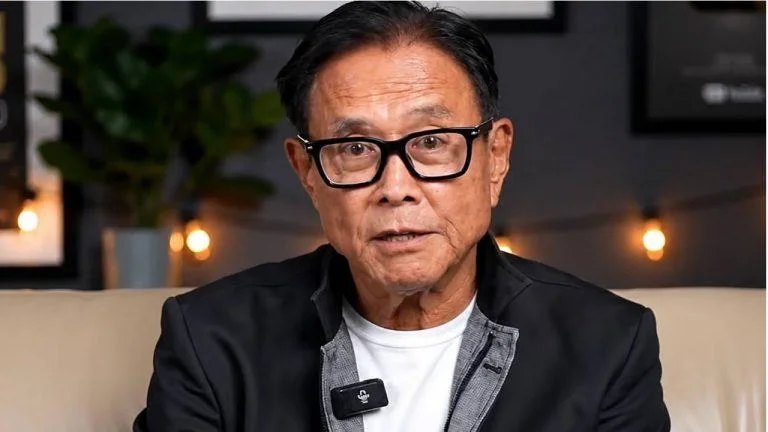
Robert Kiyosaki’s account of losing money repeatedly centers on a distinction that matters more than the loss itself: whether a setback changes how someone makes financial decisions. The author of Rich Dad Poor Dad said on X on Oct. 16 that his own losses became useful when he treated them as lessons rather than reasons to grow bitter. He also warned that sudden wealth can disappear through inflated egos or misplaced trust.

That perspective frames financial education as more than learning how to accumulate assets. It also involves recognizing poor decisions, understanding who can access wealth, and preparing for the possibility that circumstances change. Kiyosaki’s account is personal, but the risks he names—overspending, inadequate planning and dishonest advisers—can apply to people with very different levels of wealth.
Losses as a test of financial judgment
In his Oct. 16 post, Kiyosaki recalled experiencing the loss of everything several times. He credited his “rich dad” with teaching him to use setbacks to become more financially intelligent. As he put it, “I’ve experience this too, several times. The good news is, losing everything was a good thing for me.”
His point depends on what follows a loss. A mistake can reveal a gap in someone’s knowledge or judgment, but the experience alone doesn’t guarantee improvement. Kiyosaki argued that people need to examine what went wrong and change how they respond. Without that reflection, a setback may leave someone repeating the same decisions or carrying lasting resentment.
He extended the argument to education, criticizing schools for punishing mistakes instead of helping students learn from them. In his view, fear of making errors can get in the way of financial learning. “Humans were designed to make mistakes, learn, and grow smarter,” he wrote. That idea may sound simple, but applying it to money can be difficult: financial decisions often involve uncertainty, and a poor outcome can make it hard to tell whether the process was flawed or the result was unlucky.
Five money problems, then another
Kiyosaki also set out what he described as five common money problems: having no money, earning too little, spending more than one earns, not having funds set aside for the future, and having too much money. He said he had encountered all five. In his telling, working through the first four eventually brought him to the fifth.
He then described a sixth challenge: moving from sudden riches to having nothing. His examples included professional athletes, movie stars, lottery winners and people who receive an inheritance. He linked the risk to inflated egos and to dishonest people gaining access to someone’s assets, naming managers, accountants, attorneys and relatives as possible sources of misconduct.
The list points to a practical complication: more money can bring more decisions and more people involved in managing it. Someone who has built wealth may still be vulnerable to poor oversight, excessive spending or misplaced confidence in others. Kiyosaki’s warning doesn’t establish how often these outcomes occur; it identifies risks he says he encountered or observed. For readers, the useful question is how financial decisions are monitored and whether a person understands the arrangements around their assets.
Practice, preparation and the risks of investing
Kiyosaki said he created the Cashflow board game with Kim Kiyosaki to let players practice financial decisions with play money. The game asks players to buy assets, assess opportunities and track the effects of their choices. Simulated play can help people think through decisions without committing real funds, though it can’t reproduce every uncertainty or consequence of managing money outside a game.
His earlier discussion of a hypothetical $10,000 rebuilding plan similarly placed financial knowledge, mentorship and income-producing skills ahead of buying investments. The sequence reflects an emphasis on preparation before taking financial risk. It also leaves open how each person should judge advice, evaluate a skill’s earning potential or decide whether an investment fits their circumstances.
Kiyosaki has connected his broader financial outlook to economic uncertainty. In a Sept. 27 post, he warned that steep declines in stocks and bonds could leave some older savers with limited time to rebuild. On Oct. 3, he compared preparation for difficult conditions with carrying car insurance and said he preferred gold, silver and bitcoin over currency issued by central banks. In a March 16 post, he predicted bitcoin would reach $750,000 one year after a global financial crash he anticipated. That figure is his forecast, not a reported outcome.
His preference for bitcoin as a way to guard against currency depreciation carries market risk. Bitcoin’s limited supply is one reason some people view it as a possible inflation hedge, but supply alone doesn’t determine its price. Demand and market conditions also matter, and holders can lose purchasing power if bitcoin falls in value while living costs rise. Kiyosaki’s broader message about learning from losses therefore applies to his own preferred assets too: familiarity with an investment doesn’t remove the possibility of a sharp decline.
For Kiyosaki, the recurring lesson is to treat financial judgment as something that needs practice and review, especially after losses or sudden gains. His closing advice was: “Make mistakes, learn, grow, and enjoy a richer life.” How much that principle helps depends on whether people can identify what went wrong and protect themselves from repeating it.


 Kiyosaki’s post about losing everythingKiyosaki’s post listing money problemsKiyosaki’s retirement savings warningKiyosaki’s financial preparation approachKiyosaki’s bitcoin forecastBitcoin and inflation hedging


 Robert Kiyosaki Regrets Selling Bitcoin, Says Window Open to Buy More BTC
===