Tesla’s Future Value Thesis Centers on Optimus Robots and Cybercab Rides
| Shelf | Bitcoin |
|---|---|
| Date in | |
| Readers | 600 |
Musk says Optimus and Cybercab will drive most of Tesla’s future value, tying that thesis to factory robotics and driverless ride services.
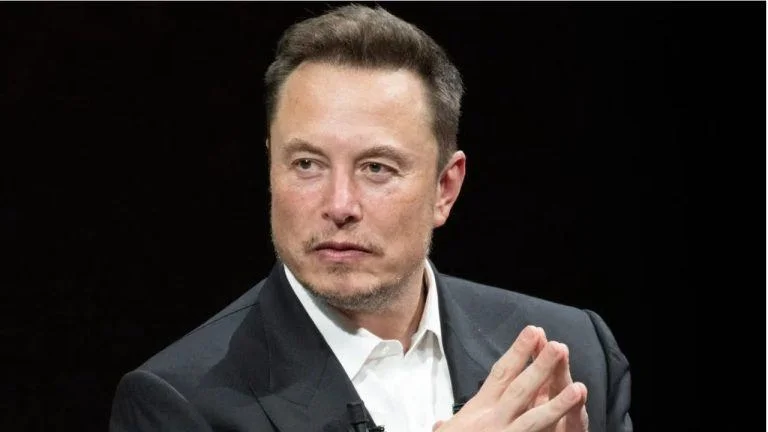
Tesla CEO Elon Musk says the company’s long-term value will rely chiefly on two businesses that extend beyond selling cars: Optimus humanoid robots and Cybercab autonomous rides. The claim puts robotics and driverless transport at the center of Tesla’s future, while leaving a substantial execution question: both products need to work reliably and find customers at scale.

In an Oct. 18 post on X, Musk wrote that “Optimus and Cybercab will be the vast majority of Tesla’s value.” The statement is a view about what may drive the company’s future, not evidence that either business has reached that scale. For users, workers and Tesla’s engineering teams, the distinction matters: the value thesis depends on products moving from development and limited deployment into repeatable commercial operations.

Two products, different revenue paths
Optimus is designed to carry out physical tasks. Tesla’s potential customers could include factories and other workplaces, where a robot might take on jobs that can be performed consistently in a controlled setting. Revenue could come from selling units or deploying them for customers. Either route depends on the robot completing useful work dependably, costing little enough to justify deployment, and fitting into existing operations.

Those requirements are linked. A machine that can perform a task in a demonstration may still need further development before it can handle varied conditions over a full work shift. Businesses would also have to weigh the purchase or deployment cost against the work performed. Tesla’s comments don’t provide figures for Optimus production, pricing, customer demand or rollout, so the size and timing of a commercial market remain unclear.

Cybercab follows a different model. It’s a purpose-built driverless vehicle associated with Tesla’s Robotaxi service, which allows passengers to book rides in autonomous vehicles. Cybercab is operating in limited areas of Austin, Texas, as the newest addition to that fleet. If the service expands, passenger trips could produce recurring revenue instead of relying on a one-time vehicle sale.

That model brings its own operating demands. A ride service needs enough vehicles and passenger demand to support its costs, while autonomous operation must function reliably in the places where the service runs. The source identifies operating costs, demand and required approvals as factors that could affect the business. Limited service in one city doesn’t establish that the same model can scale across locations.

Computing links the robotics and transport plans
Musk’s thesis connects both products to computing capacity. Tesla and SpaceX have committed $16.8 billion to begin building Terafab, an AI chip factory in Grimes County, Texas. The project could support the computing requirements of robots and autonomous vehicles, but the commitment alone doesn’t show how many chips will be produced, when they’ll be available or how much capacity each product will need.

For Optimus, computing supports a robot’s ability to interpret its surroundings and carry out tasks. For Cybercab, it supports autonomous driving functions. These systems also depend on hardware, software and real-world performance working together. More computing capacity may help development, but it doesn’t by itself establish reliable operation or customer demand.
Musk has described a much wider economic vision built around superintelligence, robotics, solar power and transporting mass to space. He said those technologies could grow to “incredible size (K2 and beyond)” and argued that the first two could enable progress in the latter two. K2 refers to a Type II civilization on the Kardashev scale, a theoretical category for a civilization able to use energy on the scale of a star.
That framework gives the Optimus and Cybercab remarks a broader context: Musk sees advanced AI and robots as foundations for expansion across other industries. But the scale of that vision is not a measure of Tesla’s current operations. The near-term evidence will come from whether the company can build useful robots and run driverless rides consistently, with clear costs and customer uptake.
Roadster remains part of the product mix
Musk’s post responded to a Teslaconomics comment urging readers to consider Tesla and SpaceX’s broader potential rather than focus on Roadster sales and profit margins. He replied, “But Roadster is super cool, so we’re doing it anyway.” The remark sets the car alongside the larger robotics and autonomous transport thesis, even as Musk says those two products will account for most of Tesla’s future value.
Tesla unveiled a redesigned Roadster on Oct. 15 with propulsion technology derived from SpaceX. Production is targeted for 2028, after delays since the vehicle’s original introduction in 2017. The company was scheduled to release third-quarter financial results on Oct. 21, an opportunity to assess progress across its automotive, robotics and autonomous transport businesses.
The practical measure of Musk’s claim will be execution: Optimus needs workplace tasks it can perform reliably at a workable cost, while Cybercab needs a ride service that can operate and attract passengers beyond limited areas. Until those conditions are demonstrated at scale, the two products remain a long-term value thesis rather than a settled account of Tesla’s business.