Micron Shares Rebound After $25.7 Million Sale by Senior Executive
| Shelf | Ethereum & Altcoins |
|---|---|
| Date in | |
| Readers | 549 |
Scott DeBoer sold 28,545 Micron shares as the stock rebounded, while labor tensions and questions about chip demand add uncertainty.

Micron shares rose after President and Chief Technology and Products Officer Scott DeBoer sold 28,545 shares for $25.7 million, putting the executive transaction alongside a volatile stretch for the chipmaker. The sale, reported on October 20, came after the stock had closed at $878.84 on October 16, its lowest closing price in 30 days. Micron then gained 1.96% to close at $896.07, and was up a further 3.26% in pre-market trading on October 21, at $925.30.
Those figures describe a sharp short-term rebound, but they don’t settle the questions weighing on the company. A reported labor dispute in Taiwan could disrupt fab operations, while doubts about data-center spending and customers’ ability to use purchased chips raise questions about how durable demand will be. DeBoer’s transaction is a notable data point in that setting, though one executive’s sale alone doesn’t establish the company’s outlook.
What DeBoer’s sale shows
DeBoer sold the shares at an average price of $900, according to an October 20 report to the Securities and Exchange Commission. It was his first reported Micron equity sale in 2026 and the largest sale by a company insider since August. The article also describes it as one of Micron’s largest insider sales since the start of the year and the lowest average sale price for an insider since May.
The timing draws attention because the transaction came near the stock’s recent low, followed by a same-day gain. But the source gives no information about DeBoer’s reason for selling, whether the shares came from a planned transaction, or how the sale relates to his remaining holdings. Without those details, the trade is best treated as a reported executive transaction rather than a clear signal about Micron’s business prospects.
DeBoer was the second senior company figure reported to have sold shares since August. Senior Vice President and Chief Legal Officer Michael Ray sold shares on October 14, raising $5.9 million, a smaller amount than DeBoer’s transaction. The two sales establish that senior executives sold stock during this period; they don’t show whether other insiders bought or sold shares, or what either executive expects from the company.
A rebound against a steep monthly decline
Micron’s October performance remained weak despite the two-session bounce described in the source. The 1.96% rise to $896.07 reduced its 30-day loss to 14.17%, and the reported pre-market price of $925.30 added to the recovery. The dates and prices matter: the October 21 figure was a pre-market quote, while $896.07 was the latest closing price cited. They reflect different trading periods and shouldn’t be read as equivalent closing values.
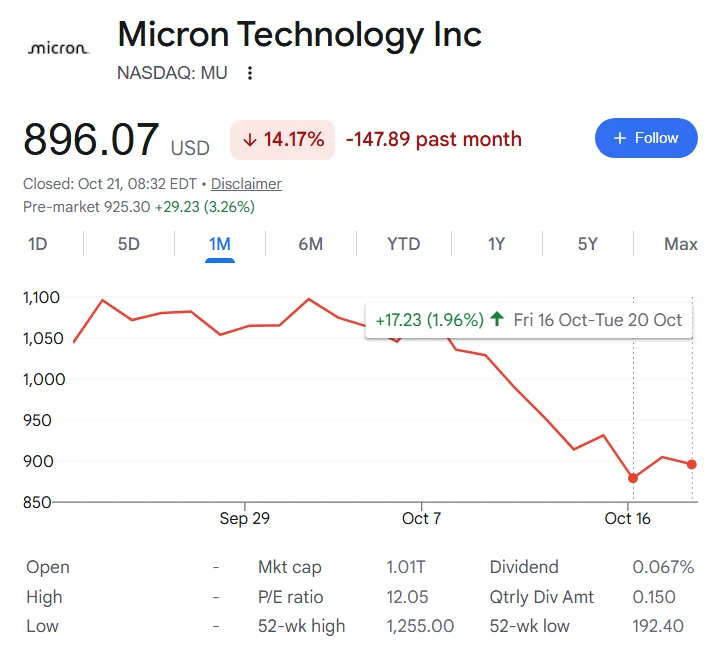
Short-term price moves can change quickly, and the source does not identify a single cause for the rebound. It also supplies no further detail about trading volume, company results, or changes in Micron’s business that would explain the gains. The useful distinction is between the stock’s immediate response and the operational risks the article raises: a rebound can occur while uncertainty about production and customer demand remains.
Labor and demand risks
One near-term concern is a labor dispute involving Micron workers in Taiwan. The source reports that negotiations had achieved only partial progress and that a one-day strike was anticipated later that week. The linked report says workers were seeking concrete terms for a 2026 bonus and clearer profit-sharing arrangements, with fab operations potentially affected. The article doesn’t say whether the work stoppage took place or quantify any effect on output, so the operational impact remained uncertain at the time of writing.
Micron also faces questions tied to the wider buildout of artificial-intelligence data centers. Recent setbacks in data-center construction and initial public offerings, alongside allegations of heavy and unsustainable spending by some large industry players, have raised concerns about the cash and credit available to fund expansion. These reports don’t prove that demand for chips is falling, but they complicate the assumption that announced infrastructure plans will translate smoothly into sustained purchases.
Customer capacity is another part of that uncertainty. The article points to reports that Amazon bought more chips than it could currently run, following similar claims about Microsoft’s purchases. If buyers acquire hardware faster than they can deploy it, orders may not reflect near-term productive use. That gap can matter to suppliers: future demand may depend on customers putting existing chips to work and securing the resources to keep building data centers.
The source connects these issues to recent shortages that pushed personal-computer and video-game-console prices higher, and argues that limited supply may have been partly shaped by buying and capacity decisions rather than an enduring shortage alone. It also notes that Micron exited its consumer business under the Crucial brand late in 2025. If corporate customers later face budget pressure, Micron may have less direct consumer business to cushion the effects, while its withdrawal could affect how consumers view the company’s role in the market.
For readers tracking Micron, the key question is whether demand from large customers becomes actual, funded chip deployment—and whether labor negotiations affect production in the meantime. DeBoer’s $25.7 million sale adds context to a volatile month, but the stock’s next moves will unfold alongside those business uncertainties.
Featured image via Shutterstock