Bitcoin Fees Reached $20.96 Million in Q3 2026 as BTC Payments to Miners Fell
| Shelf | Bitcoin |
|---|---|
| Date in | |
| Readers | 434 |
Bitcoin users paid $20.96 million in Q3 fees, while the BTC miners received each month declined in September. The figures offer one view of network demand.

Bitcoin users paid approximately $20.96 million in transaction fees during the third quarter of 2026, even as the amount of BTC paid to miners fell between August and September. The figures point to a distinction that matters when reading fee data: the dollar value of fees can rise while the number of bitcoins collected declines, because the market price of BTC also changes.
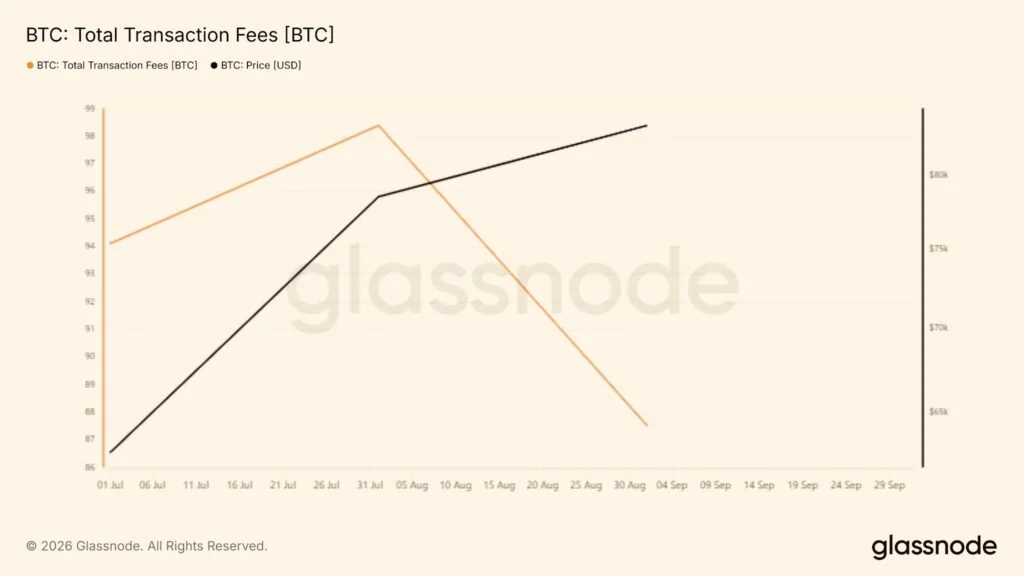
Bitcoin (BTC) users paid 94.1523 BTC in fees in July, 98.4015 BTC in August and 87.5343 BTC in September, based on Glassnode data retrieved on October 15, 2026. The reported dollar estimates were approximately $5,914,788 for July, $7,730,979 for August and $7,315,242 for September.
Why the dollar total and BTC total moved differently
The monthly estimates pair the BTC fees with average prices of $62,830 in July, $78,564 in August and $83,570 in September. As BTC’s average price rose across those months, fewer bitcoins could represent a larger dollar amount. That helps explain why the dollar value of September’s fees remained above July’s estimate even though miners received fewer BTC in September than in either earlier month.
The quarterly total of approximately $20.96 million captures fees valued in dollars, while the monthly amounts paid to miners are denominated in BTC. Those measures describe related but different things. The BTC figures show the quantity collected by miners; the dollar estimates also reflect the changing market price used to value that quantity. Comparing them without accounting for that difference can make activity appear to rise or fall more sharply than the BTC totals suggest.
Bitcoin transaction fees are payments users attach to transactions that miners include in blocks. Each block has limited capacity, described in the source as a 4-megabyte weight limit. A transaction’s size and competition for that capacity affect the fee it needs to attract timely inclusion. The fee is not calculated as a percentage of the fiat value being transferred: a high-value transfer does not automatically require a proportionally higher fee.
This makes fees one observable indicator of demand for block space. When many users seek confirmation at once, they compete for limited room, and fees can respond to that congestion. When fewer transactions compete for inclusion, fee totals may ease. Still, the quarterly amount alone does not reveal why activity changed, how many people were transacting, or whether a particular use case drove demand.
What the Q3 pattern can and cannot show
The BTC paid to miners peaked among these three monthly readings in August at 98.4015 BTC, then fell to 87.5343 BTC in September. That decline is the clearest signal in the monthly figures that the quantity of fees collected weakened toward quarter-end. The dollar estimates tell a more mixed story: September’s approximately $7.32 million was below August’s roughly $7.73 million, but above July’s approximately $5.91 million.
The source characterizes the lower September BTC fee total as evidence of weakening on-chain demand. It’s a plausible reading, but fee data is a narrow measure. It reflects competition for block space and the fees users paid, not every dimension of Bitcoin use. A lower fee total on its own does not establish a broad change in user adoption or explain what prompted the decline.
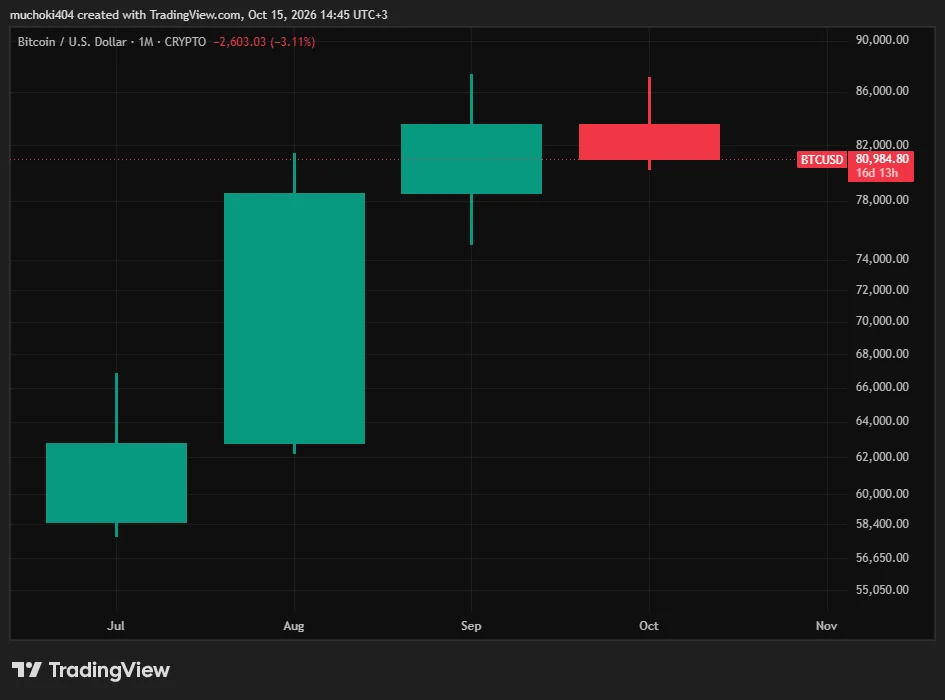
Price performance moved in the opposite direction over the period described. The source reports that BTC rose more than 43% in Q3 and was trading at $80,984 at the time of writing. That price context does not negate the decline in BTC fees: market price and demand for transaction inclusion measure different kinds of activity. The contrast is useful precisely because it cautions against treating price gains as a proxy for greater on-chain use.
What to watch in the next quarter
For Q4, a rise in the BTC amount paid in transaction fees could indicate stronger competition for block space and increased on-chain demand. The dollar total would need to be read alongside the BTC amount and the price used to value it; either figure by itself can give an incomplete picture. Monthly comparisons will also show whether September’s lower BTC fee total continued or reversed.
For users, the practical link is between network congestion and the cost of securing timely inclusion. For miners, transaction fees add to the BTC they receive, with the amount shaped by block capacity and user demand. The Q3 figures show that the dollar value of this revenue can shift even when the underlying BTC amount moves the other way. The next quarter’s fee totals will indicate whether demand for Bitcoin block space strengthened after September.
Featured image via Shutterstock