XRP Ledger Records 107.6 Million Ledgers After Token-Inflation Bug Fix
| Shelf | Ethereum & Altcoins |
|---|---|
| Date in | |
| Readers | 740 |
XRPL passed 107.6 million ledgers as researchers disclosed a flaw that could bypass XRP supply checks; version 3.4.1 addressed the bug.

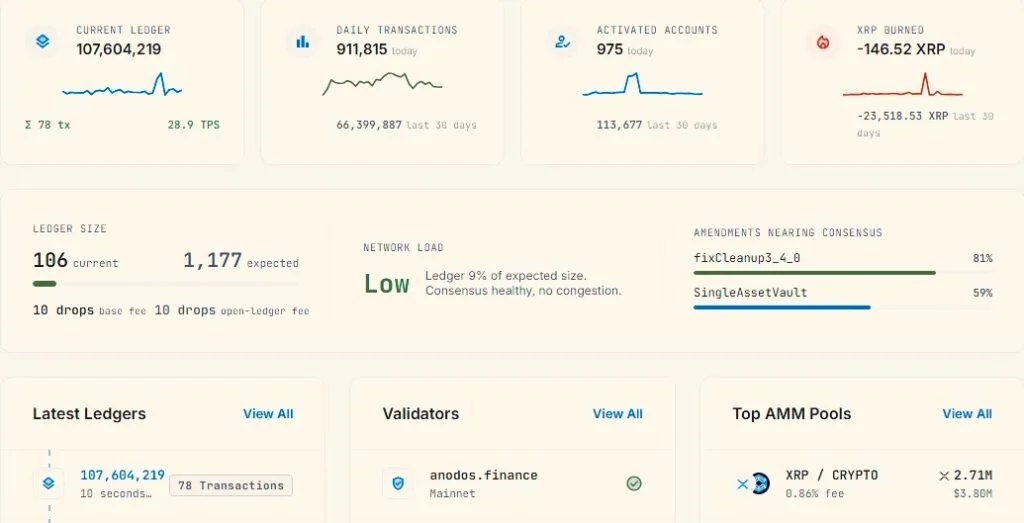
The XRP Ledger reached 107,604,219 processed ledgers as of October 12, 2026, even as the network faced disclosure of a flaw that could have bypassed checks on XRP issuance. The milestone and the vulnerability describe different parts of the network’s story: activity continued, while a defect in the payment engine exposed a route to create unauthorized tokens. The reported fix, version 3.4.1, was in place two weeks before the XRP Ledger Foundation’s statement.
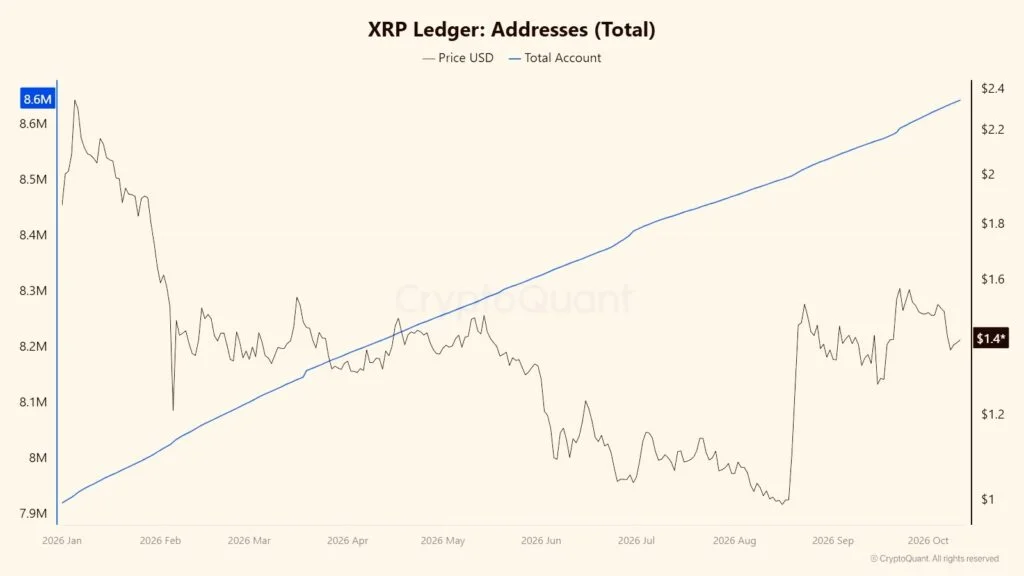
Ledger totals count the network’s recorded state updates; they don’t, by themselves, show how many people use the system or whether every transaction reflects economic activity. Still, the other figures cited in the report give a picture of recent throughput and address growth. Over the 30 days covered, XRPL recorded 66,399,887 transactions. It also activated 113,677 accounts, bringing the total number of addresses to 8,645,237 as of October 11.
Activity figures need context
The ledger count comes from XRPSCAN data cited by Finbold. The transaction total covers a 30-day window, while the ledger figure is a cumulative count. Those measurements answer different questions: one tracks transactions over a defined period, and the other shows how many ledgers the network had processed by a particular date. Neither figure alone establishes how much value moved or how many distinct users were active.
The address count also needs careful reading. “Activated accounts” describes new accounts added to the ledger during the period, while a total address count is not necessarily a count of unique people or organizations. A single participant may control multiple addresses, and an address may see limited activity after it is created. The figures are useful measures of network records and activity, but they don’t identify who is behind each account or what those accounts are doing.
A payment-engine flaw created an issuance route
The security issue was identified by an autonomous AI security agent built by Veria Labs, working alongside researcher Cayden Liao. The discovery concerned a bug described as roughly a decade old—one that human auditors had not found since 2015. The work earned $250,000, according to the source article.
The reported failure involved a complex transaction triggering an overflow in the payment engine. In computing, an overflow occurs when a calculation exceeds the range a system can represent correctly. If later checks rely on that faulty result, the software may handle an amount or condition incorrectly. Here, the researchers said the error could let someone bypass security checks and create XRP beyond the authorized supply.
That’s a serious class of defect because token issuance rules are part of a ledger’s core accounting. XRP’s supply was set at 100 billion when XRPL launched, and the Foundation said transactions cannot create more. The vulnerability therefore represented a way around a basic supply constraint, rather than an ordinary processing error. The source does not report that attackers used the flaw or that unauthorized XRP was created.
The XRP Ledger Foundation said version 3.4.1 fixed the bug two weeks before its statement. It also said the network’s credibility had not been compromised and pointed to the public nature of XRPL data. Public records can help observers examine ledger activity, but that transparency is distinct from preventing a defect in transaction processing. The practical security question is whether the software change closes the route the researchers demonstrated and whether network participants are running the corrected version.
“XRP’s supply was fixed at 100 billion when the XRP Ledger launched, and no transaction is allowed to create more. This bug was a way around that rule, and 3.4.1 fixed it 2 weeks ago,” the XRP Ledger Foundation said.
Market figures offer a separate snapshot
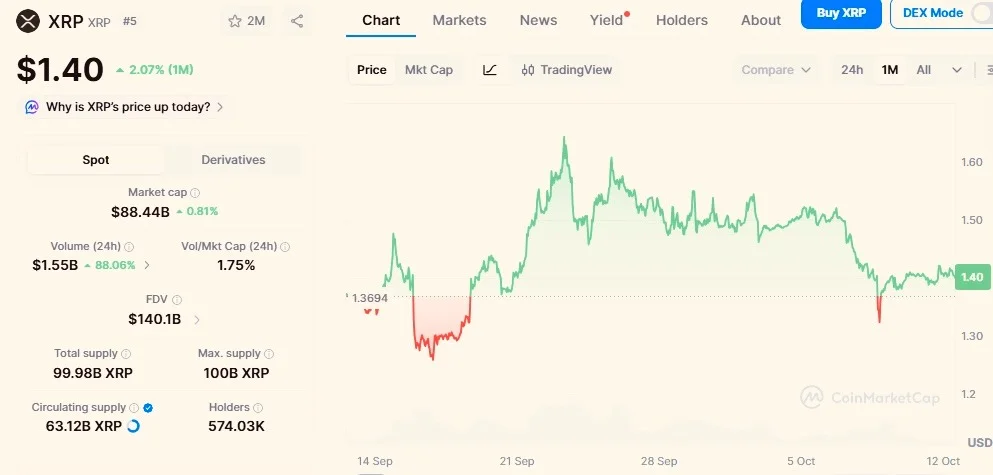
XRP gained approximately 2.07% over the month covered in the article and traded at roughly $1.40 at the time of writing. Its reported 24-hour trading volume rose by more than 88% to $1.55 billion, based on figures from CoinMarketCap. These are time-specific market readings; they don’t establish that the security disclosure caused the price or volume changes.
For users and developers, the key detail is the patch version and whether affected software has been updated. For readers tracking network growth, the transaction and address totals show continued recorded activity, while leaving usage patterns and account ownership unclear. The central takeaway is that a large ledger count can coexist with a serious software flaw: monitoring both system activity and the status of security fixes is necessary to understand what the milestone does—and does not—say about XRPL.