BofA Keeps Oracle at $240 Target as Debt and Data Center Risks Persist
| Shelf | Ethereum & Altcoins |
|---|---|
| Date in | |
| Readers | 534 |
BofA sees 80.83% upside for Oracle, but its target sits below Wall Street’s average as debt and data center concerns remain.

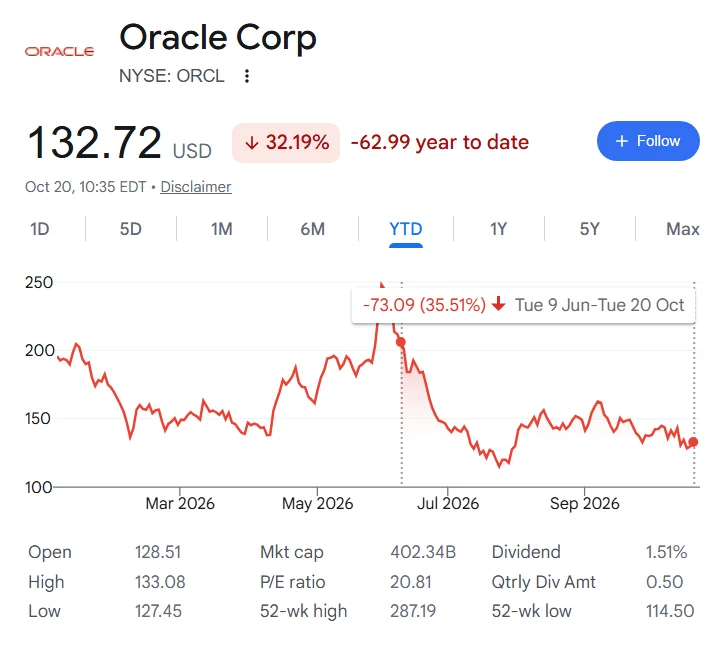
Bank of America is holding to a bullish view of Oracle even after the stock’s steep retreat and new questions about the cost and execution of its data center expansion. Analyst Tal Liani reiterated a ‘Buy’ rating on Tuesday, October 20, with a 12-month target of $240. From the cited share price of $132.72, that implies 80.83% upside. The forecast describes the analyst’s view; it does not remove the company’s financing and construction risks.
The target is also a repeat of a call Liani first made in early June, when Oracle traded near $206. By October 20, the shares had fallen 35.51% from that approximate level. The reversal makes the unchanged target notable: BofA’s expected recovery is now larger in percentage terms because the stock has dropped, while the underlying business still has to deliver on an expensive infrastructure buildout.
Funding eases one concern, but adds to the debt picture
When BofA initially set its target, it pointed to Oracle’s $50 billion in equity and debt raises as a way to reduce concern about financing the data center expansion. The distinction between those funding sources matters. Equity can raise capital without adding debt obligations, while borrowing increases the amount Oracle must service. The reported combined figure therefore signals access to substantial funding, but it does not by itself establish how much of the buildout is covered by each source or what returns the projects will generate.
Oracle’s credit profile has become part of that debate. The source reports that the company’s credit rating was lowered to BBB– in July, one step above junk status, and that subsequent developments could put it under further pressure. A weaker rating can make future borrowing more costly or constrain financing choices. For a business committing large sums to data centers, those conditions can affect both the price and flexibility of funding.
That risk sits alongside the commercial case for the investment. Data centers require substantial upfront spending, and returns depend on facilities being completed, supplied with the resources they need, and used by customers at a pace that supports the cost. The source does not provide project-level budgets, timelines, or utilization figures, so the $240 target cannot be assessed against those details here. Investors and developers watching Oracle’s buildout will need evidence of execution and customer demand, as well as continued access to capital.
New Mexico notice adds a project-level uncertainty
In late September, Oracle issued a force majeure notice related to its New Mexico data center. Such notices are generally used to address major disruptions, including wars or natural calamities. Oracle described its action as relatively commonplace and unremarkable, according to the source. The notice alone does not establish the size of any delay or its financial effect, and the article provides no further details on the project’s schedule or the circumstances behind the filing.
Even so, the episode illustrates why construction risk matters to a company investing heavily in infrastructure. A project can face disruptions that affect timing or costs, while the debt used to fund expansion can remain a consideration. The source links the notice to wider concern over Oracle’s data center plans, but offers no quantified estimate of its impact. That leaves an important gap between acknowledging the risk and measuring what it means for expected returns.
Analyst targets remain optimistic, with some recent caution
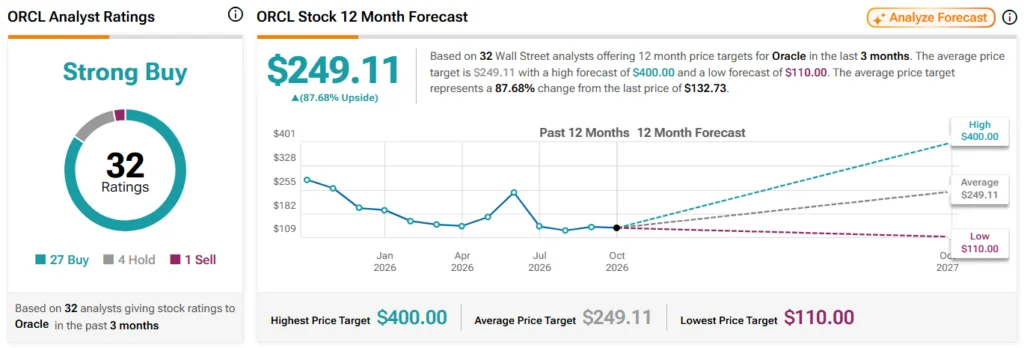
BofA’s $240 target is bullish, but it is slightly below the $249.11 average target reported by TipRanks. The average implies 87.68% upside from the reference price. The same dataset showed 27 positive recommendations, four ‘Hold’ ratings, and one ‘Sell’ rating, with Oracle shares categorized overall as a ‘Strong Buy’. These figures summarize analyst opinions at the time they were retrieved; they are not evidence that the projected gains will occur.
Recent target changes in October were more restrained. Of three revisions cited since the month began, BofA was the only firm to assign a ‘Buy’ rating. RBC Capital’s Matthew Hedberg and Dan Ives rated the shares ‘Neutral’. That split shows how analysts can reach different conclusions about the same expansion: a bullish case may put greater weight on funding and future demand, while a more cautious stance may focus on financing costs, project delivery, and the time needed for spending to translate into revenue.
For Oracle, the central question is whether its data center investment can support growth without putting more strain on its credit profile. BofA’s unchanged target sets out a clear recovery scenario, while the stock’s decline and the company’s financing and project risks show how much still has to go right. The next useful signals will be concrete progress on the buildout and evidence that customer demand can support the capital being committed.