Changer+ Launches Self-Custodial Stablecoin Wallet Across Four Networks
| Shelf | Ethereum & Altcoins |
|---|---|
| Date in | |
| Readers | 442 |
Changer+ supports USDT and USDC on four networks, with fee options and in-app services. Users retain control of their private keys.
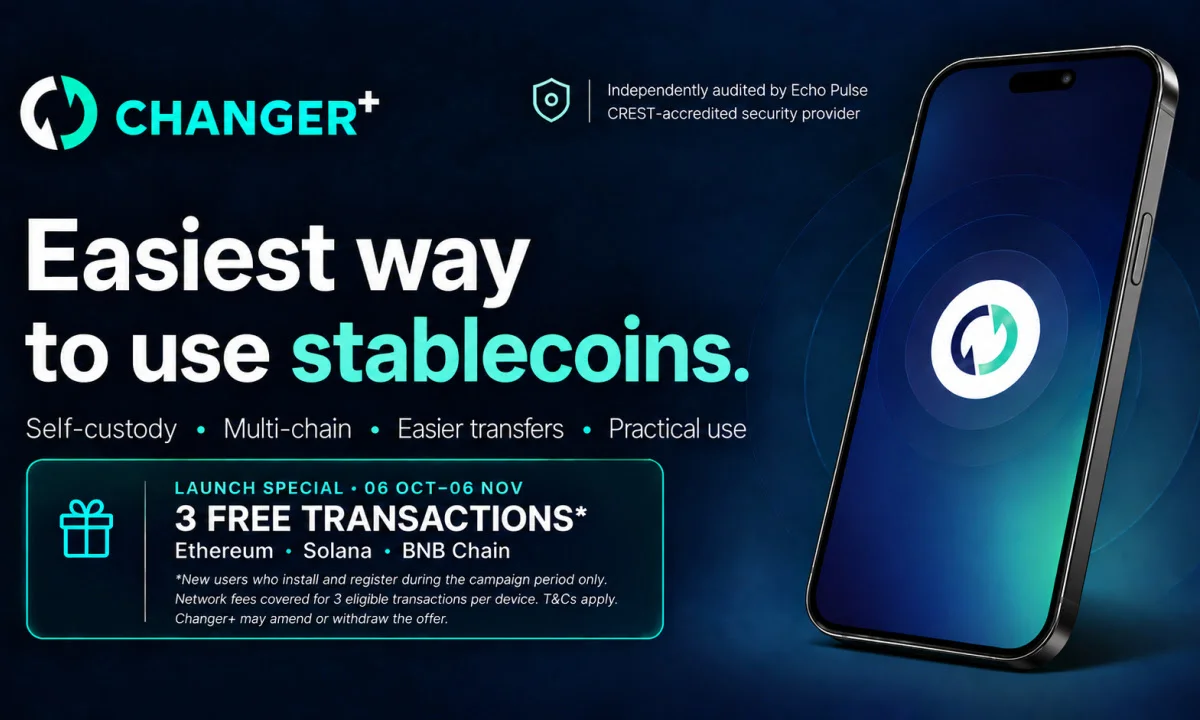
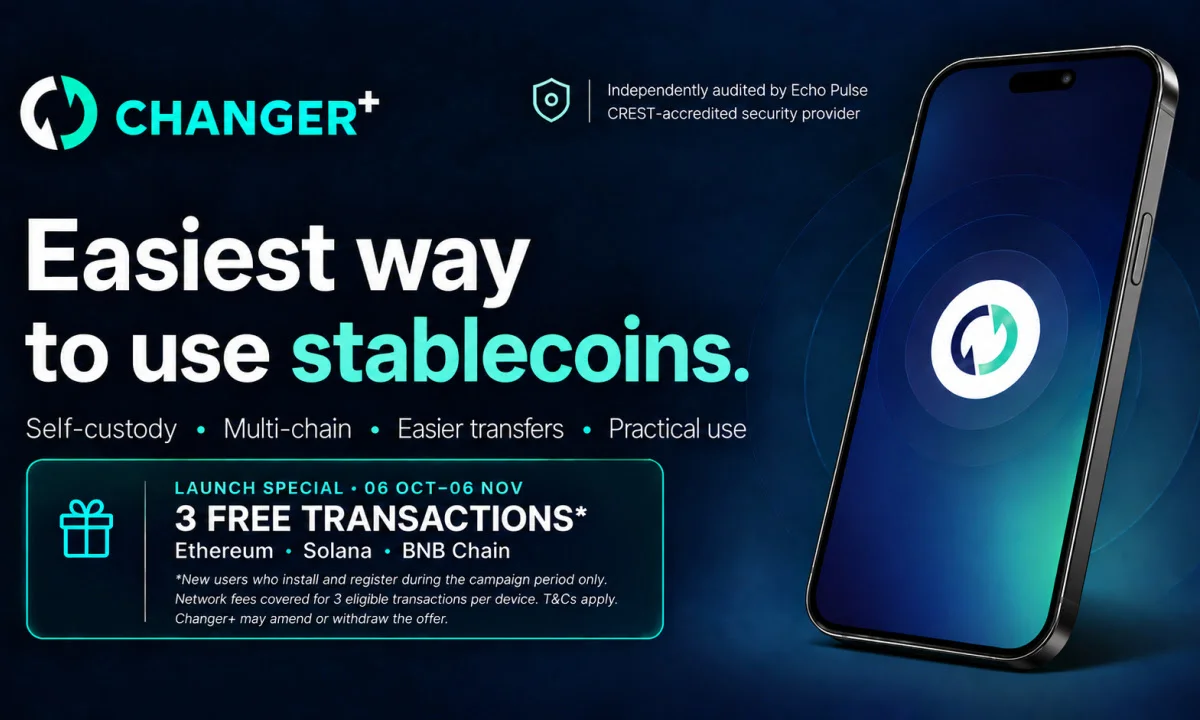
Changer+ is entering the stablecoin wallet market with a product built around a practical tension: reducing the steps involved in using stablecoins while leaving users in control of their keys. The self-custodial wallet supports USDT and USDC across Ethereum, TRON, BNB Chain, and Solana. The company says it plans to add more networks and stablecoins.
That network coverage matters because a stablecoin balance is tied to the chain it sits on. Sending funds can require a user to confirm the destination network, choose a route, and have the chain’s native token available to pay transaction costs. Changer+ aims to put some of those decisions behind a simpler interface, including options to cover network-related fees on supported transactions without first acquiring a separate gas token.
Reducing the steps around a transfer
A user holding stablecoins may not need to separately obtain ETH, TRX, BNB, or SOL before making a supported transaction, according to Changer+. That could remove a common obstacle for people who hold stablecoins but don’t keep a separate balance of each network’s native asset. The qualification matters: the fee option applies to supported transactions, and the launch material doesn’t specify which transaction types qualify or how fees are handled in every case.
Changer+ CEO Leon Gao framed the product around keeping blockchain mechanics out of the way for users. “People should not have to become blockchain experts just to use stablecoins,” he said. “The technology underneath can stay sophisticated. What users see should feel simple, clear, and dependable.”
Simpler steps can reduce user friction, but they don’t remove the need to check transaction details. Network selection, recipient addresses, and the terms of a fee arrangement still matter. The launch information does not describe the wallet’s transaction routing or explain how it presents network fees, so those details will shape how much complexity users actually face.
Self-custody remains part of the design
Changer+ describes itself as self-custodial: users retain control of their private keys and authorize their own transactions. That places responsibility for key access and transaction approval with the user, even as the app seeks to simplify the surrounding experience.
Yun Han Wong, the company’s chief growth officer, said the design is intended to preserve user ownership. “Convenience should not mean giving up control,” he said. The product’s approach therefore depends on a balance: simplifying common tasks without obscuring what users are authorizing or who controls the assets.
The company says its wallet completed an independent security audit, vulnerability assessment, and penetration testing (VAPT) conducted by Echo Pulse, which it describes as a CREST-accredited, Singapore-licensed cybersecurity service provider. That is relevant information about the product’s review process, but an assessment is a point-in-time evaluation; it can’t establish that a wallet or its users’ devices will be free from future vulnerabilities. Changer+ CTO Zack Chen leads the multi-chain architecture and security development, according to the company.
The app also includes security risk signals intended to help users identify suspicious activity and potentially unsafe addresses. The launch material doesn’t explain the signals’ sources, coverage, or accuracy. Users will need to understand what the warnings mean and avoid treating them as a guarantee that an address or transaction is safe.
Wallet functions extend beyond transfers
Alongside holding and transferring stablecoins, Changer+ lists global eSIM data plans and a lifestyle ticket marketplace among its current features. The company says it intends to add more use cases. These functions give the wallet a role in spending and digital services, though the launch description does not detail supported countries, providers, payment flows, or any limits on availability.
That range reflects the product’s broader premise: stablecoins may be used for payments, remittances, and digital commerce, while the experience can remain split across chains and apps. Combining balances, transfers, fee options, risk signals, and services in one interface could reduce the number of tools users need to navigate. It also means users should assess each feature on its own terms, including how payments are processed and what information the app provides before a transaction.
Launch access and availability
Changer+ is available on iOS and Android. From October 6 to November 6, 2026, new users who install the app and register during that period can receive three eligible transactions per device with network fees covered on Ethereum, Solana, and BNB Chain. Terms and conditions apply, and the company reserves the right to amend or withdraw the offer.
The offer is limited by chain, device, user eligibility, and the transaction rules. It does not list TRON among the three chains included. Users considering the offer should check the terms in the app to understand which transactions qualify.
Changer+ says it is backed by a private family office and is focusing product development on self-custody, usability, security, and practical stablecoin uses. The launch establishes the wallet’s supported networks and features; the next useful measure will be how clearly it explains fees, network choices, and security signals as users move beyond basic transfers.
Changer+ is available through the iOS app and Android app. More information is available at changer.plus; the company also lists its community links and contact address [email protected].